A dynamic energy contract is one where the price you pay for electricity changes every hour, following the wholesale market, instead of being fixed for a year. When power is abundant and cheap — windy nights, sunny middays — you pay very little. During the evening peak, you pay more. For a household that can shift usage into the cheap hours, or automate it, a dynamic contract is usually cheaper than a fixed one. For a household that can't, it can cost more. This guide explains, in plain language, how it works and who it actually suits.
How the price is set
Wholesale electricity in the Netherlands and Belgium is priced on the EPEX Spot exchange. Every afternoon, around 13:00, the hourly prices for the next day are published in a 'day-ahead' auction. From 2026, pricing is increasingly settled per quarter hour rather than per hour.
Your supplier passes that hourly market price straight through to you, adds a fixed markup to cover its costs, and then the usual energy tax and grid fees are applied on top. So the part that moves is the raw market price; the rest is stable. When you hear 'dynamic', 'hourly' or 'EPEX-based' contract, this is what it means.
Fixed vs variable vs dynamic
Three contract types sit on a spectrum from most predictable to most flexible:
| Contract type | How the price moves | Best for |
|---|---|---|
| Fixed | Locked for 1–3 years | People who value certainty above all |
| Variable | Changes every month or quarter | Mild flexibility, little effort |
| Dynamic | Changes every hour (EPEX) | People who shift usage or automate it |
A fixed contract is insurance: you pay a premium for a price that won't surprise you. A dynamic contract is the opposite deal — you take on the market's ups and downs in exchange for access to its lowest prices.
What a typical day looks like
Prices follow a fairly recognisable daily shape. Overnight (roughly 00:00–06:00) is usually cheapest, often helped by strong wind. Midday can dip again when solar production peaks. The expensive window is the evening peak, roughly 17:00–21:00, when everyone is home cooking and heating. On a normal day the gap between the cheapest and most expensive hour can be a factor of ten; on extreme days, wholesale prices can even go briefly negative when the grid is oversupplied.
Who actually saves on a dynamic contract
The honest answer: it depends far less on luck than on whether you can move demand into the cheap hours. You are likely to benefit if you:
- have flexible, high-consumption devices — an EV, a home battery, a heat pump, or even just a dishwasher and washing machine you can time,
- are willing to shift that usage to off-peak hours, or better, let a system do it automatically,
- and don't have a rigid, evening-heavy consumption pattern you can't change.
You may be better off on a fixed contract if most of your electricity use lands in the evening peak and you have no way to move it, or if predictable bills matter more to you than squeezing out the lowest price.
The catch: you have to act on the prices
A dynamic contract only rewards you if you actually use the cheap hours. Checking a price app every day and manually timing your appliances works for a few weeks, then most people stop. That is where the real savings quietly leak away.
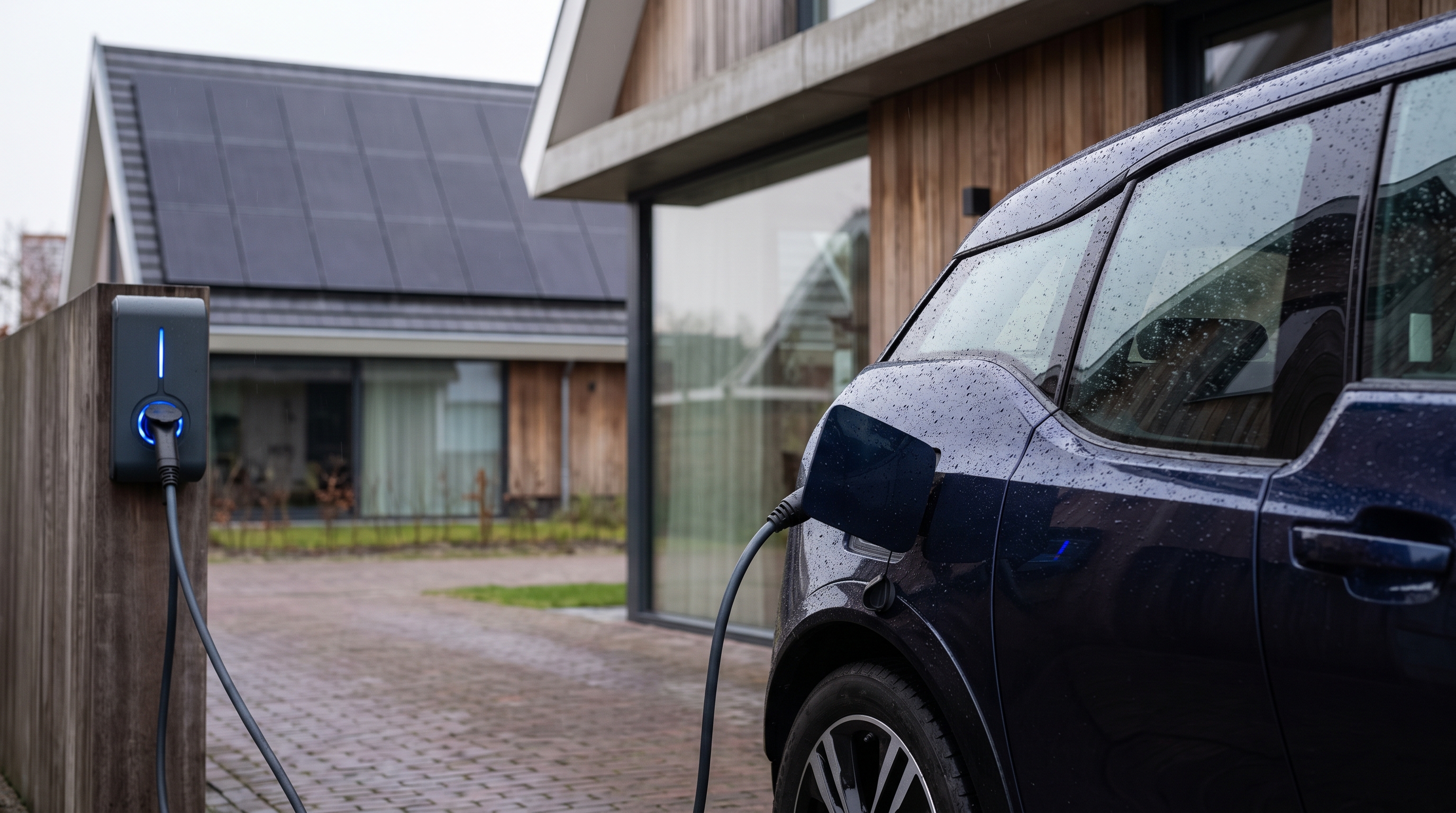
This is why dynamic contracts pair so well with automation. A smart energy system reads tomorrow's prices and runs your EV charging, battery, and flexible loads in the cheapest windows without you thinking about it. For the two clearest examples, see when to charge your EV cheapest and how a home battery earns on a dynamic contract.
How to switch, and what to compare
Several suppliers offer dynamic contracts in the Netherlands and Belgium, including Tibber, Frank Energie, Vandebron and others. They all pass through the same EPEX price, so the thing to compare is their fixed monthly fee and per-kWh markup, not the market price itself. Under the 2026 energy rules, dynamic and hourly contracts are increasingly becoming the default option rather than a niche choice.
The bottom line: a dynamic contract is a powerful tool if you have flexibility to give, and a poor fit if you don't. Work out where your electricity use actually falls during the day before you switch — that, more than the market, decides whether it pays.