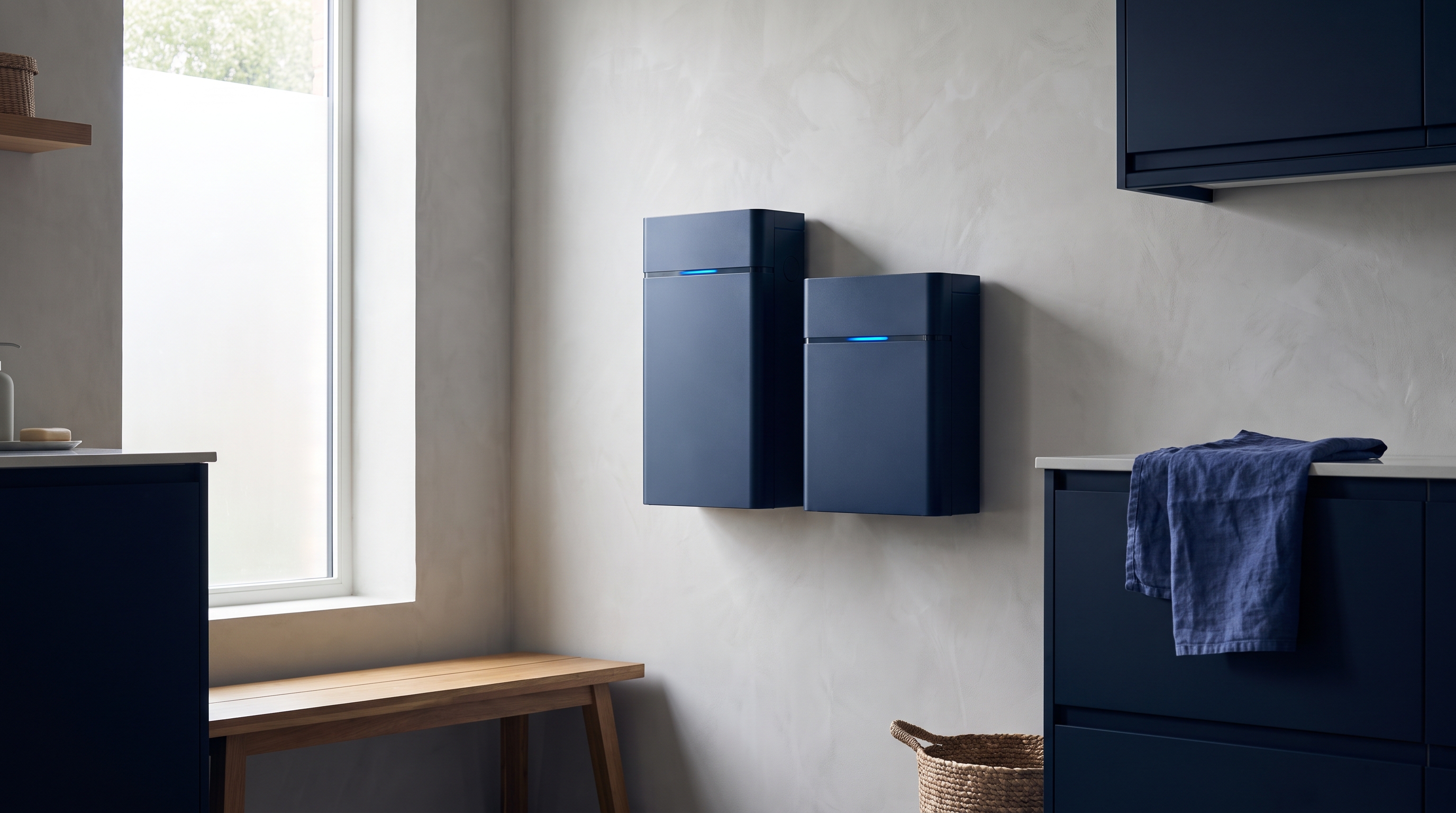
A home battery earns most of its money when it runs on a dynamic contract. The reason is simple: a battery makes money from price differences, and a dynamic (hourly, EPEX-priced) contract is the only contract that gives it price differences to work with. Charge when power is cheap, use or release it when power is expensive, and the gap is yours. In 2026, an actively managed 10 kWh battery on a dynamic contract is reported to net somewhere around €600 to €1,200 a year once you combine solar self-consumption, day-ahead arbitrage, and a share of the imbalance market. The spread in that range is not rounding. It is the difference between a battery that is well controlled and one that is not, and it is the whole point of this article.
Below is how the pairing actually makes money, the real numbers, and the caveats most pages skip.
Why a dynamic contract is the battery's engine
On a fixed contract, every kWh costs the same all day. A battery has nothing to arbitrage, so it can only shift your own solar surplus from afternoon to evening. That alone is worth having, especially after 2027 (more on that below), but it leaves half the value on the table.
On a dynamic contract, the price changes every hour, and from 2026 increasingly every quarter hour. Overnight wind can push the wholesale price near zero. A sunny midday can do the same. The evening peak between 17:00 and 21:00 is when power is dearest. A battery that charges in the cheap hours and discharges into the peak turns that daily price curve into income. This is energy arbitrage, and it is why a dynamic contract is effectively a precondition for a battery to pay back in single-digit years rather than fifteen-plus.
If dynamic contracts are new to you, start with our explainer on dynamic energy contracts, then come back here for the battery part.
The two income streams: day-ahead and onbalansmarkt
A battery on a dynamic contract can earn from two different markets, and it helps to keep them separate.
Day-ahead arbitrage. Every afternoon, hourly prices for the next day are published. Your system looks at tomorrow's curve, charges the battery in the cheapest hours, and discharges in the most expensive ones. The spread is predictable a day ahead, which makes this the steady, lower-risk engine. On a typical 2026 day the usable spread runs roughly €0.10 to €0.20 per kWh after losses, which is the bulk of most households' battery income.
Imbalance market (onbalansmarkt). This market runs in real time, settling per quarter hour, and it pays for flexibility exactly when the grid is short or long. Because you are helping with an acute grid problem, the compensation can be far higher than day-ahead, sometimes spiking above €1.00 per kWh, occasionally going negative. Reports put well-optimised imbalance income 30 to 50 percent above day-ahead in good periods. That is the headline upside, and it is real, but it carries the caveats in the next section.
One important point of accuracy: you do not trade on the imbalance market yourself. Access runs formally through a Balance Responsible Party, and in practice your supplier or aggregator (Frank Energie, Tibber, NextEnergy and others) takes that role and optimises your battery on your behalf.
The real numbers, and the caveats around them
Here is the honest version of the upside.
For a 10 kWh battery actively managed on a dynamic contract in 2026, the commonly cited figures are roughly:
| Income source | Indicative annual value (10 kWh) | Risk profile |
|---|---|---|
| Solar self-consumption shift | €300–€600 | Steady, grows after 2027 |
| Day-ahead arbitrage | €200–€400 | Predictable a day ahead |
| Imbalance market share | €150–€400 | Volatile, not guaranteed |
| Combined (well controlled) | €600–€1,200 | Depends heavily on control |
Now the caveats, because they decide where in that range you land.
Round-trip losses are real. A battery does not give back everything you put in. Roughly 10 to 20 percent is lost charging and discharging, so you are always arbitraging the spread minus that loss. Be sceptical of any page quoting gross numbers without it. (One widely repeated claim of "25% efficiency" is simply wrong; that is closer to the loss, not the efficiency.)
The imbalance market is not a guaranteed return. TenneT itself has said a six-year payback built on imbalance trading "offers no guarantees," and 2026 returns have fallen and become less predictable as more batteries chase the same flexibility. Treat onbalansmarkt income as upside, not as the foundation of your business case.
Cycling has a cost. Trading on price means more charge and discharge cycles than simple solar shifting. The good news is most imbalance trading happens at gentle power levels (around 0.5C), which modern LFP cells tolerate well, so extra wear is usually modest. Still, check your warranty: most cover a fixed number of cycles or a total energy throughput, and aggressive trading uses that budget faster.
Availability trade-off. A battery busy earning on the imbalance market is sometimes not sitting empty and ready to soak up your afternoon solar. Good control resolves this; bad control makes you choose.
For the full payback calculation on the hardware itself, see our guide on whether a home battery is worth it in the Netherlands.
The VAT angle most owners miss
There is a real financial accelerator here that has nothing to do with electricity prices: reclaiming the 21% VAT on the battery purchase. To do that, the Belastingdienst expects you to use the battery commercially, which in practice means actively trading energy through a dynamic contract rather than just storing your own solar. For many households this VAT recovery is the single biggest improvement to the payback period. It is also genuinely fiddly, and the rules are specific. Treat this as a reason to talk to your supplier and the Belastingdienst, not as tax advice from a blog.
Why control is the whole game
Notice that the gap between the bottom and top of every range above comes down to one thing: how well the battery is managed. The hardware is identical. A battery on basic "charge on sun, discharge at night" logic captures the solar shift and almost none of the arbitrage. A battery that reads tomorrow's price curve, holds capacity for the most expensive evening hours, decides in real time whether a surplus kWh is worth more stored or exported, and steps into the imbalance market only when it pays, captures the full €600 to €1,200.
No human can do this by watching an app. People try for a few weeks and then stop checking. Automation is what makes the difference durable, and it is exactly where a smart energy system earns its keep: optimising quietly in the background so you get the upside without the daily attention.
Why this matters more from 2027
The saldering scheme ends on 1 January 2027. After that, exported solar is paid at a low feed-in rate (terugleververgoeding) instead of being netted against your imports at the full retail price. The spread between what you are paid to export and what you pay to import opens up, and that spread is precisely what a battery on a dynamic contract captures. In other words, the pairing is becoming more valuable just as the rules change. For the full picture of that shift, see our explainer on what the 2027 saldering phase-out means for solar owners.
So, is it worth pairing them for you?
The combination makes the most sense if you already have solar, have real evening consumption, and are willing to run a dynamic contract and let the system manage the battery automatically. It is a weaker case if your battery is small, your daytime use already absorbs your solar, or you want to hand-pick prices yourself (you will not keep it up).
And the honest bottom line: the steady money is solar self-consumption plus day-ahead arbitrage. The imbalance market is genuine upside on top, but it is volatile and unguaranteed, so build your decision on the predictable part and treat onbalansmarkt income as a bonus. Every euro figure here is indicative; model it against your own tariff and consumption before you commit.