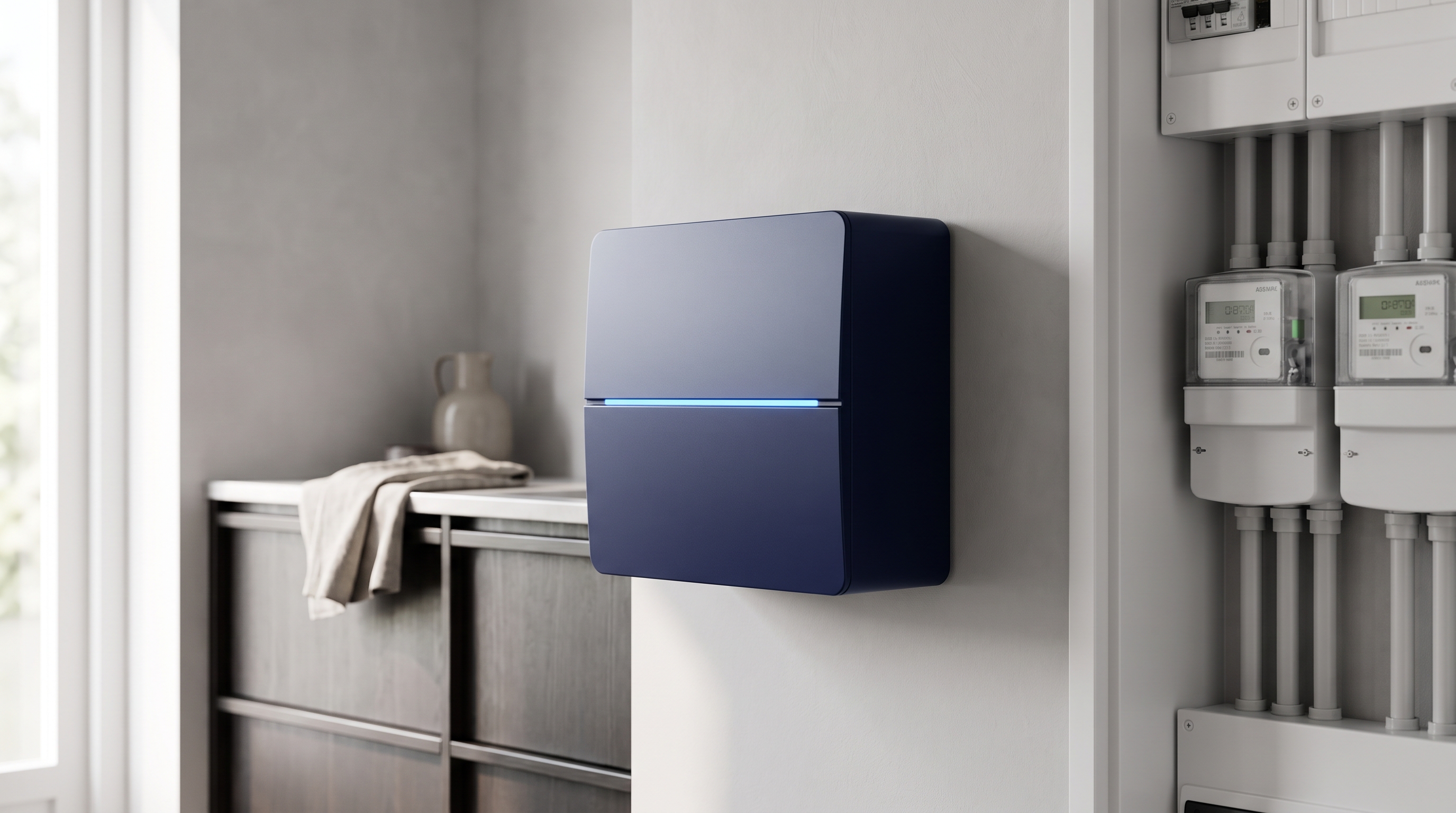
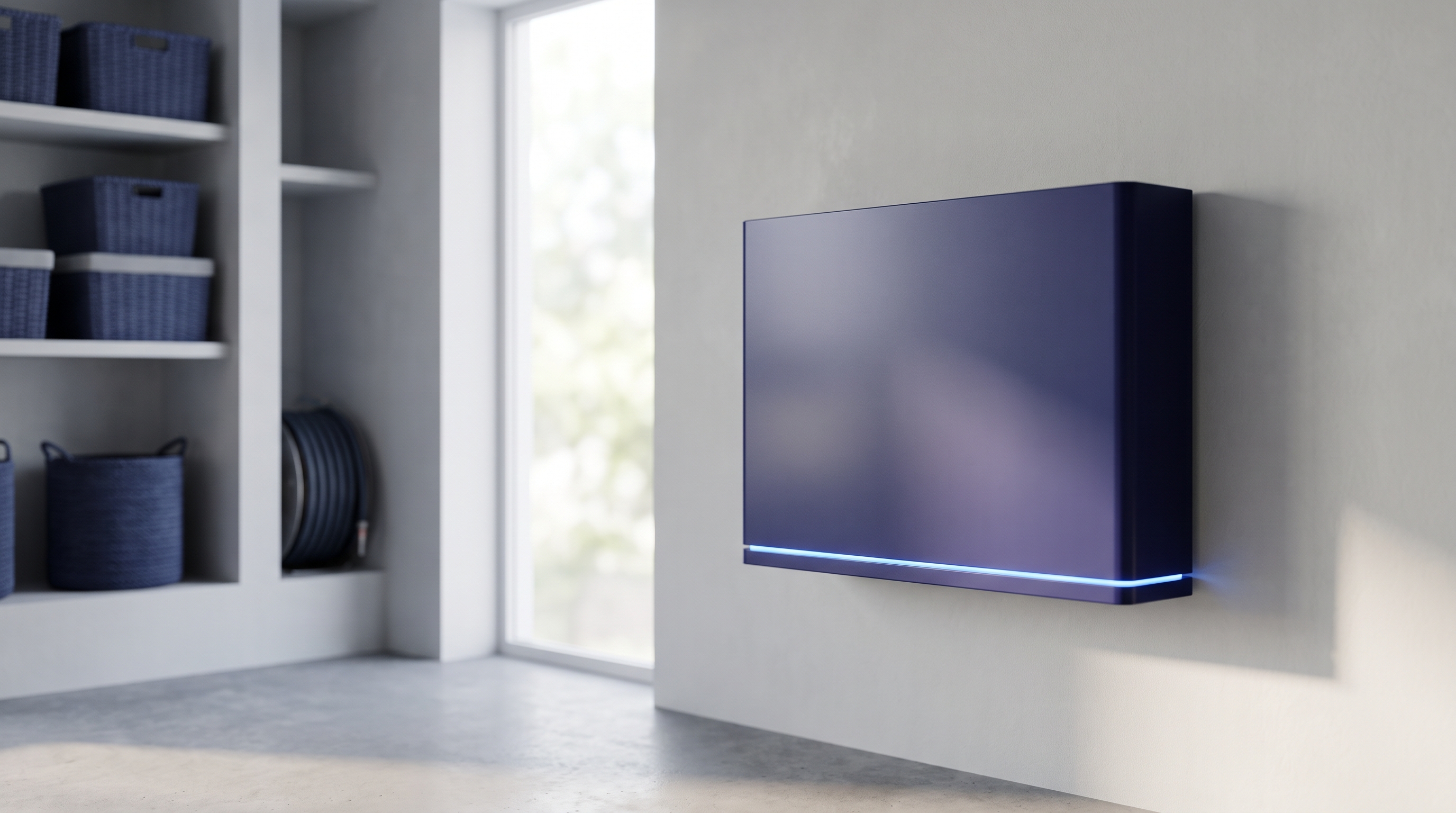
Why home battery storage is booming right now
Three forces are converging to make home battery storage one of the fastest-growing segments in European residential energy:
- The end of net metering (salderingsregeling) in the Netherlands from 2027 means exported solar power drops in value from ~€0.28/kWh to ~€0.05/kWh. A battery that stores that surplus and uses it in the evening suddenly delivers 5–6x more value from the same solar energy.
- Energy prices remain structurally higher than pre-2021 levels. Every kWh you store and self-consume is worth more than it was five years ago.
- Battery hardware costs have fallen 40–60% since 2020, with further declines expected. The technology that was financially marginal a few years ago is now compelling for a broad range of households.
If you have solar panels and are thinking about a battery, 2026 is one of the best moments in the last decade to make that decision. Here's what you need to know.
The two types: integrated home batteries vs plugin batteries
Not all home batteries are the same category of product. There's an important distinction between integrated home battery systems and plug-in portable batteries:
Integrated home battery systems
These are fixed installations, typically wall-mounted or floor-standing, connected directly to your home's electrical system by a certified installer. They are designed to operate automatically, integrating with your solar inverter and drawing from or charging to the grid as needed.
Common systems in the European market include:
- Tesla Powerwall — 13.5 kWh capacity, widely known, requires Tesla inverter or compatible system.
- BYD Battery-Box — available in 2.56–15.36 kWh configurations, popular with multiple inverter brands.
- Huawei LUNA2000 — modular from 5–30 kWh, integrates tightly with Huawei inverters.
- Victron Energy — highly flexible, popular for off-grid and hybrid systems, widely used in boats and campers as well as homes.
- Growatt ARK — modular, cost-effective, gaining market share rapidly in NL/BE.
- Enphase IQ Battery — pairs with Enphase microinverter systems specifically.
Plugin / portable power stations
A newer and rapidly growing category: large portable battery units that plug into a standard household outlet. They don't require installation and can be moved between locations.
The leading brands are EcoFlow (DELTA series), Bluetti (AC series), and Jackery (Explorer series). Units range from 1–5 kWh, with some systems supporting expansion modules up to 10+ kWh.
Their key advantage: zero installation cost and no need for a certified electrician. Their limitation: they charge and discharge through a standard socket, which caps efficiency slightly and makes deep integration with solar inverters and smart energy management systems more limited — though this is improving rapidly with newer models supporting solar input and API connectivity.
Battery chemistry: LFP vs NMC — what it means for you
| Characteristic | LFP (Lithium Iron Phosphate) | NMC (Lithium Nickel Manganese Cobalt) |
|---|---|---|
| Cycle life | 3,000–6,000+ cycles | 1,000–3,000 cycles |
| Degradation at 100% | Tolerates regular full charge | Degrades faster at full charge |
| Energy density | Lower — larger/heavier for same kWh | Higher — more compact |
| Safety | Very safe, no thermal runaway risk | Lower tolerance for overcharge/heat |
| Cost | Lower per kWh | Slightly higher per kWh |
| Best for | Daily cycling, home storage | Compact applications (EVs, portables) |
For home storage where the battery cycles daily, LFP is almost always the better choice. The superior cycle life means the battery outlasts the warranty period significantly, and the safety profile is better suited to an indoor installation. Most leading home battery systems (BYD, Growatt, many Victron setups) now use LFP chemistry.
How much capacity do you actually need?
This is the question most buyers get wrong — they either over-specify (paying for capacity they'll rarely use) or under-specify (the battery fills up by noon and exports anyway).
The right size depends on:
- Your daily solar surplus — how much does your installation typically generate beyond your daytime consumption?
- Your evening consumption — how much do you draw from the grid between 4pm and midnight?
- Whether you have an EV — because the EV battery can absorb a large proportion of solar surplus during charging hours, reducing what the home battery needs to cover.
| Household profile | Recommended battery size |
|---|---|
| 2-person household, 4 kWp solar, no EV | 5–7 kWh |
| 2-person household, 6 kWp solar, no EV | 7–10 kWh |
| Family (4), 6–8 kWp solar, one EV | 5–10 kWh (EV absorbs significant surplus) |
| Family (4), 8–10 kWp solar, two EVs | 10–15 kWh |
| Large consumption / heat pump | 15–20 kWh |
What does a home battery cost and what is the ROI?
Prices have fallen substantially and continue to decline. In mid-2026, installed costs for integrated systems in the Netherlands and Belgium are approximately:
| Capacity | Installed cost (approx.) | Annual savings (solar + saldering) | Payback period |
|---|---|---|---|
| 5 kWh | €3,500 – €5,000 | €400 – €600/year | 7–10 years |
| 10 kWh | €6,000 – €8,000 | €700 – €1,000/year | 7–9 years |
| 15 kWh | €9,000 – €12,000 | €950 – €1,400/year | 8–10 years |
| Plugin 2 kWh (EcoFlow etc.) | €800 – €1,500 | €150 – €300/year | 4–7 years |
These are indicative figures for 2026. Savings increase significantly post-2027 when the salderingsregeling ends — the same battery delivers more value once the export rate drops. Model your ROI using the post-2027 rate for a more accurate picture.
How a HEMS makes a home battery significantly more valuable
A battery alone optimises relatively simply: charge when solar is available, discharge in the evening. A battery combined with a HEMS like Lyvra can do substantially more:
- Dynamic price arbitrage — charge the battery from the grid at night when prices are very low (e.g. €0.04/kWh), then discharge during the evening peak (€0.35/kWh). The margin funds the system.
- Capacity tariff protection (Belgium) — the battery can instantly smooth consumption spikes that would otherwise set a new monthly peak.
- Solar forecast-based charging — if tomorrow is forecast to be cloudy, the system charges the battery from the grid at a low overnight price rather than leaving it empty and buying expensive evening power.
- EV + battery coordination — the system decides in real time whether surplus solar should go into the home battery or the EV battery, based on which is more valuable at that moment.
A home battery managed by a HEMS typically achieves 30–50% better returns than the same battery operating with basic charge/discharge logic alone.
Summary: key decisions before buying
- Integrated or plugin? — Integrated for maximum solar integration and long-term ROI; plugin for flexibility and zero installation cost.
- LFP chemistry preferred — for daily home cycling, cycle life and safety profile are superior.
- Size to your actual evening deficit — not your peak production.
- Calculate ROI using post-2027 rates — the salderingsregeling change makes batteries more valuable from next year.
- Plan for a HEMS from day one — a battery is significantly more valuable when managed intelligently.
The decision to add a battery is increasingly straightforward for households with solar panels and meaningful evening consumption. The financial case in 2026 is strong and strengthening.