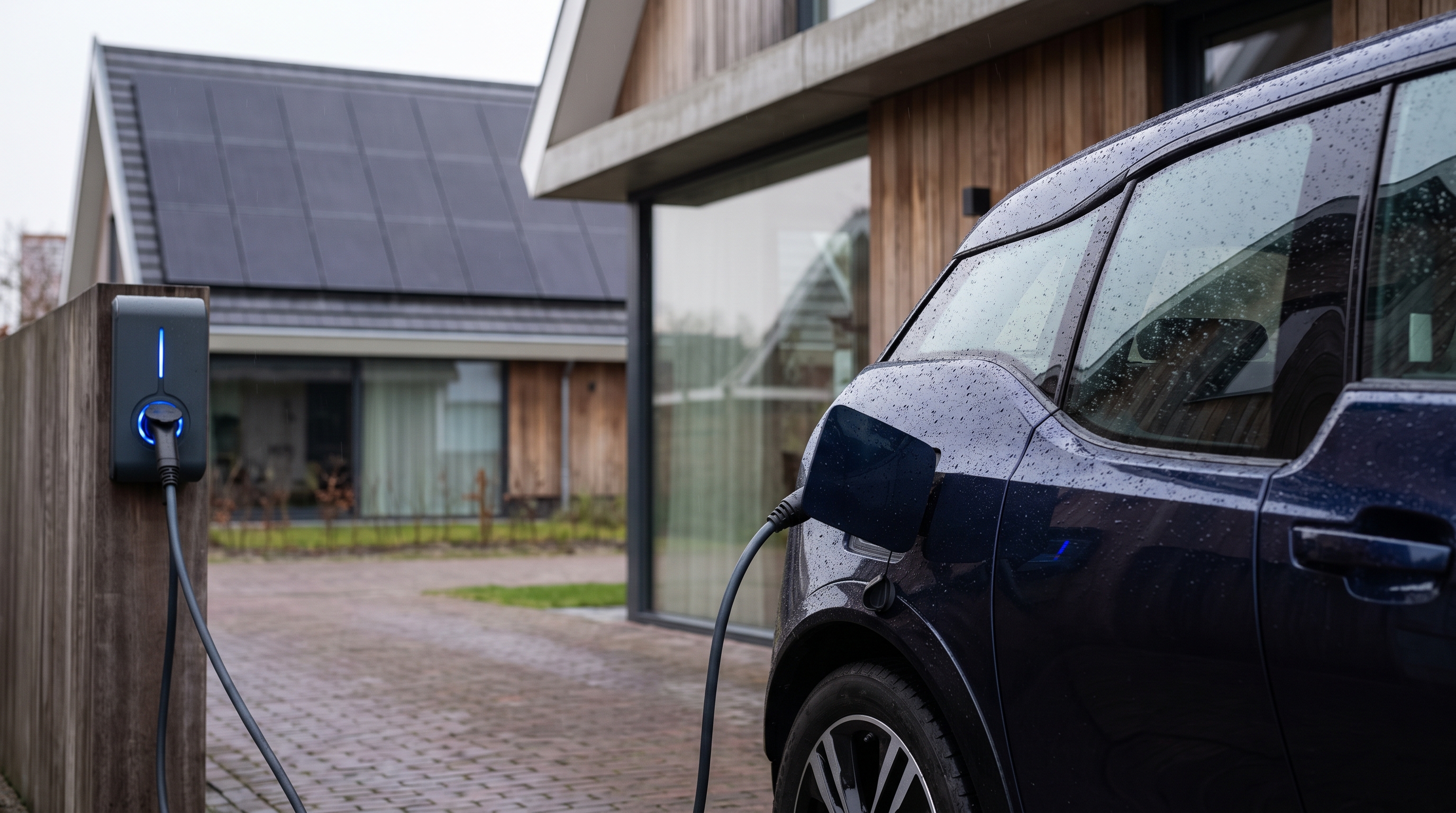
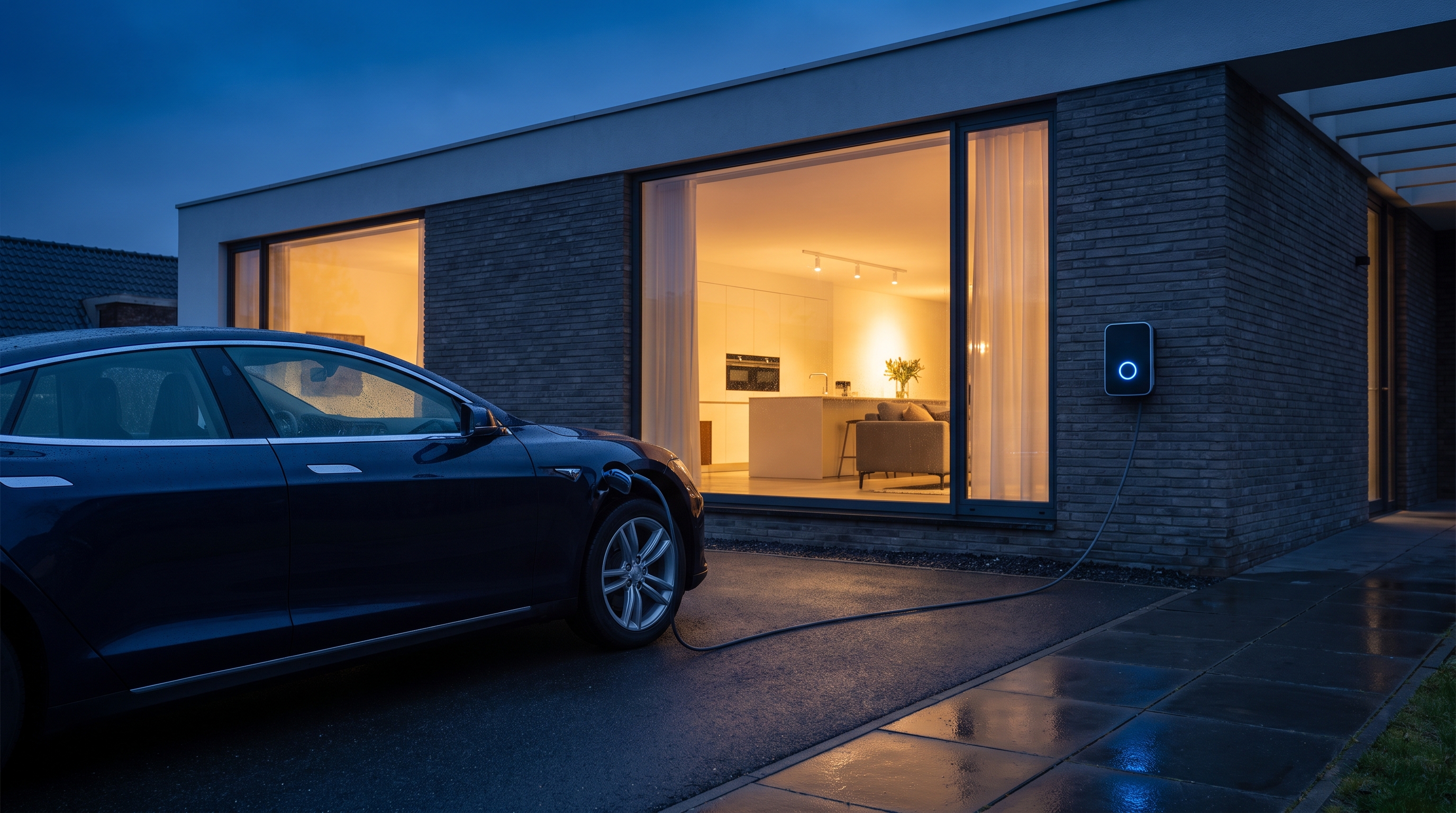
Since 1 January 2026, private electric-vehicle owners in the Netherlands can earn money for the electricity they charge at home. A new scheme called ERE (emissiereductie-eenheden, or emission-reduction units) replaced the older HBE system and, for the first time, opened it up to households. In practice you can earn roughly 7 to 14 cents per charged kWh — often cited around 10 cents — before the fee your provider takes. This guide explains what ERE is, who can claim it, and how the payout actually works.
What ERE is, and why it replaced HBE
Dutch law requires companies that sell fossil fuels to offset part of their CO2 emissions. They do this by buying credits from parties that can demonstrably reduce emissions — and charging an EV with grid electricity instead of burning petrol or diesel counts. Each ERE represents one kilogram of avoided CO2.
Until the end of 2025 this ran through HBE (hernieuwbare brandstofeenheden), which measured renewable energy content in gigajoules and, in practice, was only accessible to large-scale operators. ERE, which took over on 1 January 2026, measures actual CO2 reduction instead — a cleaner fit for pure electric charging — and crucially widened the door: home chargers, small businesses, fleets and VvE (owners' association) charge points can now take part.
How much can you earn?
Through the first half of 2026, payouts have sat at roughly 7 to 14 cents per charged kWh, with around 10 cents a commonly cited midpoint, before the service provider's commission. The exact amount moves with the market price of EREs and the fee your provider charges.
For a typical private EV driving 15,000 km a year, that's in the order of 3,000 kWh of charging — so at around 10 cents/kWh, roughly a few hundred euros a year, on top of any savings you already make by charging at cheap hours. And there is a bonus: if you can prove the electricity came from your own solar panels, some providers pay a higher (double) rate.
Who can claim it, and the requirements
To take part, a few conditions apply:
- your charge point must be installed in the Netherlands and deliver electricity to a registered road vehicle,
- it must have a MID-certified meter (Measuring Instruments Directive) so the charged kWh can be measured reliably,
- and you register through a licensed claiming service, not directly yourself.
That last point matters: as a private individual you can't register with the Nederlandse Emissieautoriteit (NEa) yourself. You sign up with an 'inboekdienstverlener' (a claiming provider) who handles the registration, verification and sale on your behalf.
How the payout works
The flow is straightforward once you're set up. Your claiming provider registers the kWh your charger delivered to EVs in the NEa register, converts them into EREs, sells those on the market, and pays you the proceeds minus their commission. Payout is typically made once a year, in arrears. Because providers charge different fees, it pays to compare their rate and commission before you sign up — the headline cents-per-kWh is only worth what's left after the cut.
Where this fits with the rest of your setup
ERE rewards you for charging an EV at all; it stacks neatly on top of charging it at the right time. If you're on a dynamic contract, you can earn the ERE payout and pay the cheapest hourly price for the same kWh — see when to charge your EV cheapest and dynamic energy contracts, explained simply. Combined, they turn everyday home charging into a small but real income rather than just a cost.